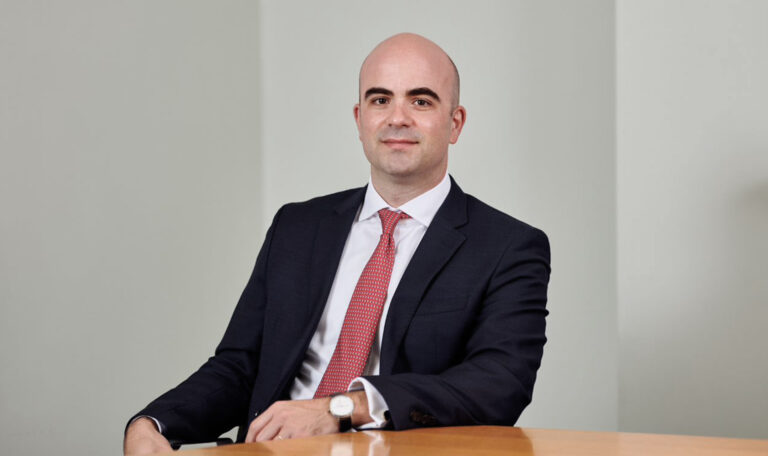
Mark Wassouf successful on a s.67 challenge to an arbitration award in the Commercial Court
Mark Wassouf has acted for two parties in a rare example of a successful challenge to an arbitration award under s.67 of the Arbitration Act 1996. The challenge was heard by Mr Justice Henshaw in a two-day trial, which included the cross examination of expert witnesses on foreign law, in the Commercial Court on 21 and 22 October 2025.
The underlying case concerned a contract signed between an intelligence firm and a law firm which was said to have been representing the claimants. The contract provided for the intelligence firm to be paid a success fee in the event that information provided by it was used by the law firm’s clients and led to a payment of damages or a successful settlement in a then-contemplated investment treaty dispute against “country 2”. The intelligence firm alleged that that condition had been met by virtue of the successful conclusion of two different disputes, and demanded payment of a commensurate success fee from the three claimants. The claimants refused and this led the intelligence firm to commence LCIA arbitration proceedings, seated in London, against them.
In the arbitration, the first and third claimant challenged jurisdiction on the basis that they were not parties to, nor bound by, the contract signed between the intelligence firm and the law firm. That challenge was rejected by the tribunal in its award on the primary basis that the law firm had “usual authority” as a matter of English law to bind those parties, since they were its clients. The tribunal went on to find that all three claimants were jointly and severally liable directly to the intelligence firm for the full success fee.
All three claimants challenged the award in England pursuant to s.67 of the arbitration act – the first and third claimants on the basis that the law firm had no authority to bind them; and the second claimant on the basis that a provision of the civil code of its home jurisdiction meant that it lacked capacity to enter into the arbitration agreement, alternatively that the law firm lacked authority to bind it as a matter of that law.
Mr Justice Henshaw accepted the challenge as brought by the first and third claimants, finding that the tribunal’s finding of jurisdiction on the basis of “usual authority” purported to give the law firm a usual authority far more extensive than the case law recognised. Accordingly he held that the award
Mr Justice Henshaw however rejected the second claimant’s challenge on the basis that it was brought on a basis which had not been argued in the underlying arbitration, and that there was no good reason why it had not been raised then for purposes of s.73(1) of the Arbitration Act.
The full (anonymised) judgment is available here.
Given its subject matter, the case has also received industry attention, including an article in Global Arbitration Review, which is available here.
Mark was instructed on the case by Raid Abu-Manneh, Rachael O’Grady and Rhys Morgan of Mayer Brown International LLP.